Thursday, 2 February 2017

Sleep Wake cycle- Circadian Rhythm

Circadian Rhythm

Circadian rhythm (also known as your sleep/wake cycle or body clock) is a natural, internal system that’s designed within our body to regulate feelings of sleepiness and wakefulness over a 24-hour period. This process is based on light, it is controlled by that part of brain that responds to light, which is why humans are most alert while the sun is shining and are ready to sleep when it’s dark outside.


Your circadian rhythm causes your level of wakefulness to rise and dip throughout the day. Most people feel the strongest desire to sleep between 1:00pm and 3:00pm (a.k.a. the post-lunch, afternoon crash) and then again between 2:00am and 4:00am, but this can vary from person to person. That’s why some people are “morning people,” while others function best in the evening. Your circadian rhythm can also change as your age. When you were a teenager, for example, your body was programmed (so to speak) to sleep for more total hours, as well as go to bed and wake up later.

If you follow your body’s natural cues regarding when to go to sleep and wake up, your circadian rhythm should stay balanced, but a change in your schedule (like if you stay up late pulling long hours at work one day or sleep in one Saturday), can disrupt your body clock. Follow these three tips to keep your circadian rhythm functioning as it should.

1. Stick to a Consistent Sleep Schedule. A regular bedtime is one part of the equation, but waking up at the same time daily will also help keep your circadian rhythm in check. A good 7-9 hours sleep from 10 p.m. to 6 a.m. is best according to me.


2. Go for an A.M. Walk. In the morning, exposure to the sun (or indoor light), won’t just give you an energy boost—it can also reset your circadian rhythm. A quick outdoor stroll in the morning will give you enough sun exposure to signal to your brain that it’s time to start the day. No time to walk? Simply raise the blinds or switch on your brightest light instead.

3. Limit Evening Tech. Bright lights in the evening hours can throw off your body clock by confusing your brain into thinking it’s still daytime. Artificial blue light (the type that laptops, tablets and cell phones emit) is the worst culprit, so try to power-down tech devices at least two to three hours before bed or just make your screen at night mode


Tuesday, 31 January 2017

QR Code And Bar Code

QR Codes And Bar Codes

QR Codes and barcodes  are systems for conveying large amounts of data in a small format.  They offer many benefits like minimum space, speed, labor savings and cost savings, among other benefits.
QR CODES
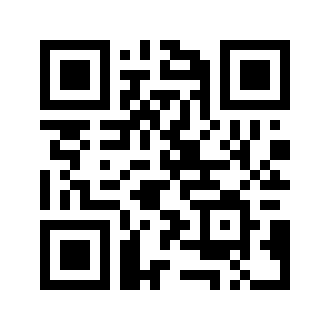
A recent trend among small businesses is the growing use of QR codes.  QR codes (pictured below) are similar in one sense to bar codes, in that they contain information which can be read by a QR code reader.
(nyastuff.blogspot.com)
QR codes can be scanned by your mobile camera and using QR code scanning app. You could walk into a place of business, see a QR code on an item, scan it with your smartphone, and immediately have access to a lot of information electronically.
QR codes have been around for years.  But in the last 12 months I’ve seen the use of QR increasing drastically among entrepreneurs as mobile usages has grown. QR Codes are well suited for marketing purposes, Libraries, Buisness cards, among other uses.
Or you might give out schwag such as a coffee mug, imprinted with a QR code where someone can find out more information about your company.  Or how about imprinting a QR Code on one of those pop-up banners when exhibiting at your next trade show?  Attendees can scan your company’s information by holding their smartphones up to the banner — so you don’t have to shell out for expensive printed materials and they don’t have to lug all that heavy paper home on the plane.
It’s not hard to generate a QR code. You can create one for free online. The QR code image above is one I created using the Google URL shortener and it took me all of 2 seconds to create.
QR Codes have infinite uses in small businesses, especially for marketing, now that everybody on the planet seems to walk around glued to a smartphone.
BARCODES
Significant difference in the two is that while a barcode only holds information nicely in the horizontal direction, a QR can do so vertically as well. Barcodes have been around for decades.  They are versatile with a large variety of uses — especially in retail and manufacturing settings, and in transport and shipping.


We’re used to seeing the common barcode printed on packaging at the grocery store or in other retail outlets, when items are passed over the barcode reader at the checkout counter to ring up a sale.  Barcodes not only are valuable at the point of sale, but also for managing inventory and raw materials internally, so that you know what you have in stock.
Barcodes have become common in shipping, to enable greater accuracy and speed in getting packages delivered.  And barcodes are used to manage large filing systems, library books, and a host of other purposes where large numbers of items need to be tracked efficiently.
Barcodes are relatively inexpensive, and help drive speed, efficiency and profitability.
The QR code, similar to a barcode, is an example of an information matrix. QR codes are referred to as two-dimensional, because they carry information both vertically and horizontally. Another direct result to this is greater potential to carry information in a smaller space.
Barcodes and QR Codes have their place for different purposes and under different circumstances. So there’s no excuse for not using technology to operate your business more efficiently and effectively — it’s just a question of which technology is better for your needs and your budget.

Monday, 30 January 2017

False Awakening: Dreaming About Waking Up

False Awakening: Dreaming About Waking Up

Have you ever had a dream in which you’ve woken up, only to then wake up a little while later for real?
False awakenings are remarkably vivid dreams in which you think you’ve woken up and then realize that you are still asleep.

In this article I’ll be looking at false awakenings and ways to manage them. You’ll find some practical techniques for preventing them if they’re upsetting you.

Too real to be a dream?

One of the fascinating features of a false awakening is just how vivid and real it can seem. Even you feel that it is a dream you might not have any question to your feelings.
It's only when you wake up in real, than you realize and get puzzled about your dream.
False awakenings can seem so real that perhaps even on finally waking up you might wonder whether you’re still dreaming or not.

What causes false awakenings?

False awakenings don’t yet have any firm scientific explanation. It’s understandably a difficult area to research. The two most common theories are:

Worry or anxiety

If you’re worrying about something happening the next day, you might dream about getting on with the day. Your brain might then dream of waking up.Or If you’re worrying, you might expect to sleep badly and wake up in the night, or need to wake up early for an important day. This could influence your dream and create false awakenings.

Sleep fragmentation

Your brain can be in more than one state of consciousness at once. So it’s possible that the part of your brain responsible for dreaming and also that for consciousness are both active. This fragmentation could then lead to vivid dreaming of gaining consciousness and waking up.


Treatment

False awakenings are not thought to be an indicator of mental illness. In fact they are quite common, and it’s thought that most people experience them during their lives. So in that respect they don’t usually require treatment.
Anxiety or stress treatment if thought to be a cause.
It could be though that the best option is not to worry about it and try to accept it as a normal part of dreaming.

Alternatively, there are different paths you can go down in terms of self-help: stopping them happening.
Self-help for false awakenings
It’s one thing to wake up properly after a false awakening dream and then lie in bed thinking about how odd it was.

Have you had an experience where a false awakening has then led to a lucid dream? Do you think it’s something you would like to try and achieve, or would you prefer to just stop them happening?

Feel free to share you story and views in the comments below. I’m sure other readers will also find your experience useful and interesting.